
Office and furniture
Desks, chairs, shelving and unwanted office furniture. Mark what is staying, what can be dismantled and any confidential or electrical items that need separate handling.

Office furniture, bulky items and commercial spaces. Bring the scope, access and timing together before the clear-out starts.
Business clearance guide
Clearances are collected by the van load. Choose a half or full Luton van load. Most clearances go as General waste; add any mattresses or fridges as extra items.
Desks, chairs, shelving and unwanted office furniture. Mark what is staying, what can be dismantled and any confidential or electrical items that need separate handling.
Display fittings, packaging and non-hazardous fixtures from a refresh or fit-out. Identify construction materials separately; do not assume demolition or structural work is included.
A wider inventory across rooms or floors. Include handback dates, occupied areas and access restrictions so the scope and sequence can be agreed.
Use these pictures to judge roughly how much you have. Heavy items can reach the weight limit before the van looks full, so a list of items and photographs help us plan the collection.
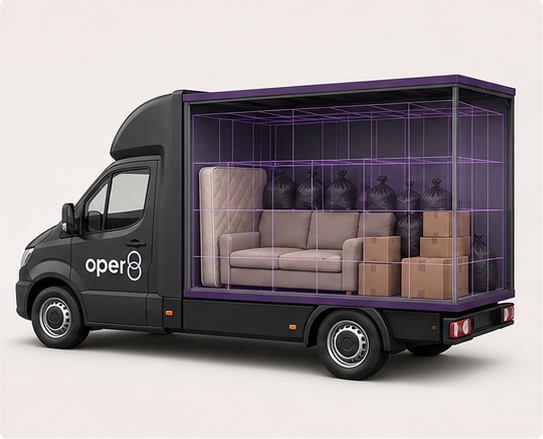
Up to 500 kg, about 10 cubic yards. Roughly half a Luton van. Suits a room of office furniture, a run of shelving or a stack of bagged waste.
Plan this service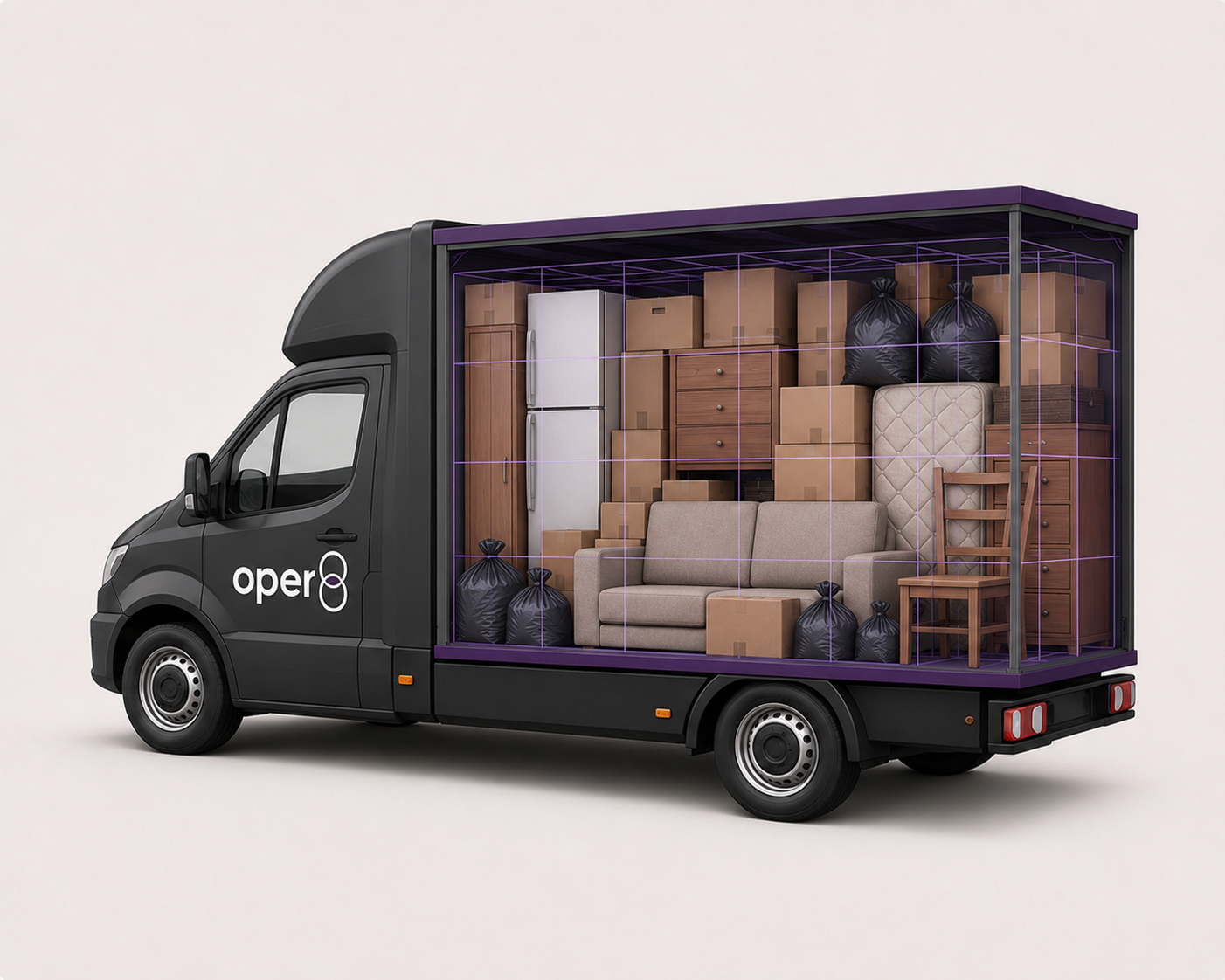
Up to 1 tonne, about 20 cubic yards. A full Luton van. Suits a larger office, shop or storeroom clear-out.
Plan this serviceMost clearances are mixed, so book them as General waste. Choose Wood, Upholstered items or Electricals only for a load that is all that one type.
No electrical equipment (WEEE) or hazardous items in General waste. Book electricals as an Electricals (WEEE) load, and add fridges and mattresses as extra items.
Standard mixed clearances: bagged rubbish, packaging and cardboard, broken furniture, fixtures and mixed timber or wood. No electricals or hazardous items.
For a load that is all wood, such as timber furniture, pallets, doors and offcuts. Mixed clearances with some wood go under General waste.
Sofas, office chairs, cushions and other upholstered seating. These can contain persistent organic pollutants (POPs), so they travel as their own load.
All electrical and electronic equipment, such as computers, monitors, printers and cables. Electricals are always booked separately from general waste; add fridges as extra items.
Mattresses: counted per mattress. Fridges: counted per fridge. Each collection includes one call-out and a Waste Collection Note (WCN), charged once per collection whatever the load.
List item counts, large dimensions where known and the materials involved. Photos help show the scope; do not estimate a tonnage from how full a room looks.
Tell us about stairs, working lifts, floor level, carrying distance, parking and loading restrictions. Dismantling, labour time and occupied-site arrangements must be agreed.
Electricals and upholstered seating are booked as their own load, and mattresses and fridges as counted extra items, not in general waste. Batteries, chemicals, gas cylinders and suspected asbestos are not part of a standard clearance; tell us about them separately.
Why oper8
We’re a waste services broker. We bring your requirements and collection partners together, without asking you to start again for every site or service.
Your portal keeps recorded service details, schedules and requests in one place. Account access is online, not a promise of round-the-clock human monitoring or a guaranteed collection time.
List the items and materials, with photographs or an inventory where available. Tell us about large or heavy items and what needs dismantling.
Access, stairs, lifts, parking and the space to work all affect the arrangements. Include any handback dates or restrictions in your enquiry.
Bring the items, access and timing together with one point of contact. We will agree what is included and how the clear-out will work.
Common questions